

Table of Contents
- Why Breathable Workout Shirts for Men Matter
- Quick Comparison: Our Top Picks
- 1. Performance Tee: Best Overall Breathable Workout Shirt
- 2. Fatherhood Legacy Tank Top: Best Men's Gym Tank Tops for Hot Days
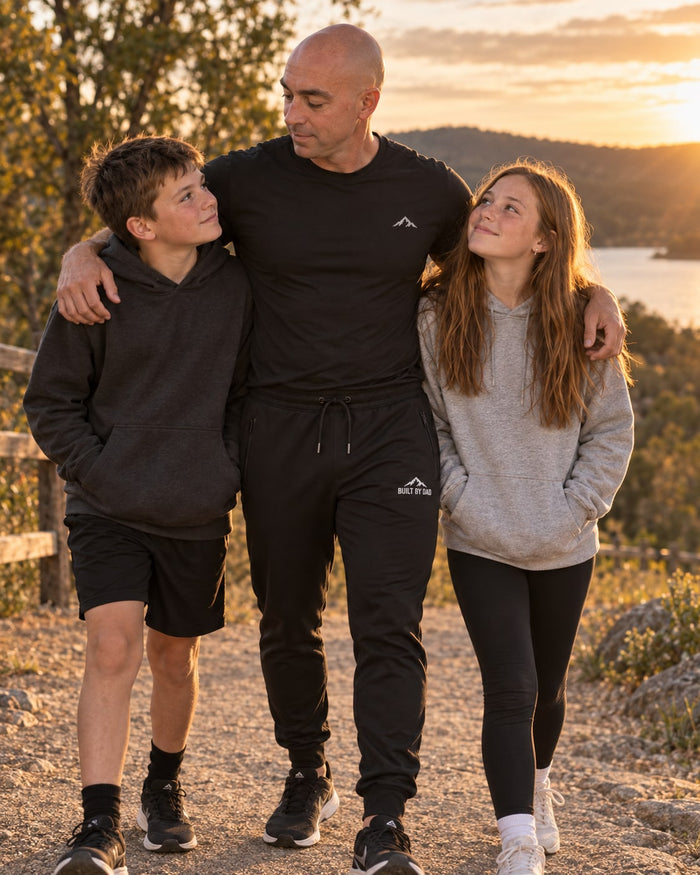
- 3. Heavyweight Sweatpants: The Recovery Layer After the Work
- Moisture-Wicking Shirts for Men: What to Look For
- Best Workout Shirts for Hot Weather: Fabric, Fit, and Airflow
- How We Evaluated These Shirts
- Frequently Asked Questions
Last Updated: October 21, 2026
Why Breathable Workout Shirts for Men Matter
That matters more for dads than for anyone else. Your training window is short, often squeezed between a 6 a.m. lift and school drop-off, and a shirt that traps heat turns a 30-minute session into a slog. At Built By Dad, we build breathable workout shirts for men around a simple idea: gear should keep up with the day you're actually living, not the one in a magazine.
Quick Comparison: Our Top Picks
| Pick | Best For | Fabric Notes | Price |
|---|---|---|---|
| Performance Tee | Best overall breathable workout shirt | Moisture-wicking performance fabric | $34.99 |
| Fatherhood Legacy Tank Top | Best men's gym tank tops for hot days | Lightweight 4.2 oz cotton, retail fit | $27.99 |
| Heavyweight Sweatpants | Recovery layer after training | Heavyweight fleece | $31.79 |
If you want one shirt that handles lifting, yard work, and the school run, start with the Performance Tee. If heat is the enemy, the tank is the cooler call. And when the work is done, the sweatpants are the layer that lets you recover instead of rushing to the next thing.

1. Performance Tee: Best Overall Breathable Workout Shirt
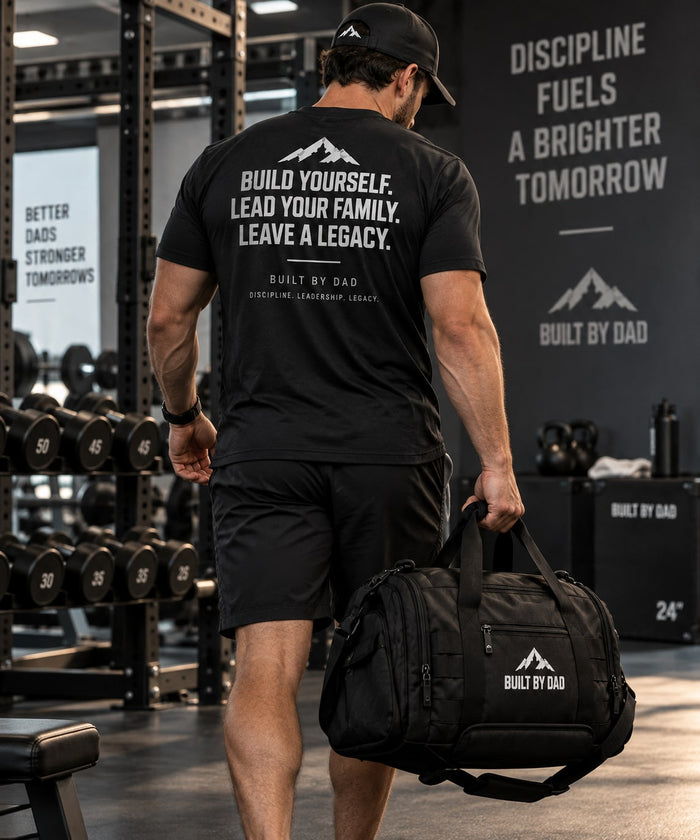
Our top pick is the Performance Tee, a moisture-wicking performance shirt built for training, yard work, and everything in between. It's the piece we reach for when the day has no clear boundaries, because most dad days don't.

Here's where it earns its spot. Moisture-wicking fabric moves sweat away from your skin instead of holding it against you, which is the difference between finishing a set of rows and standing around in a wet shirt. The fit is cut for movement, so overhead presses and yard work both feel unhindered.
Pros: Moisture-wicking fabric, works for training and everyday tasks, one shirt covers multiple jobs. Cons: It's a performance tee, not a heavyweight cotton shirt, so don't expect that thick, structured feel.
At $34.99, it's the one we'd buy first.
2. Fatherhood Legacy Tank Top: Best Men's Gym Tank Tops for Hot Days
When the garage hits 90 degrees, the Fatherhood Legacy Tank Top is the cooler option. It's a lightweight 4.2 oz tank in Airlume combed and ring-spun cotton, cut with a retail fit and side seams that hold their shape.

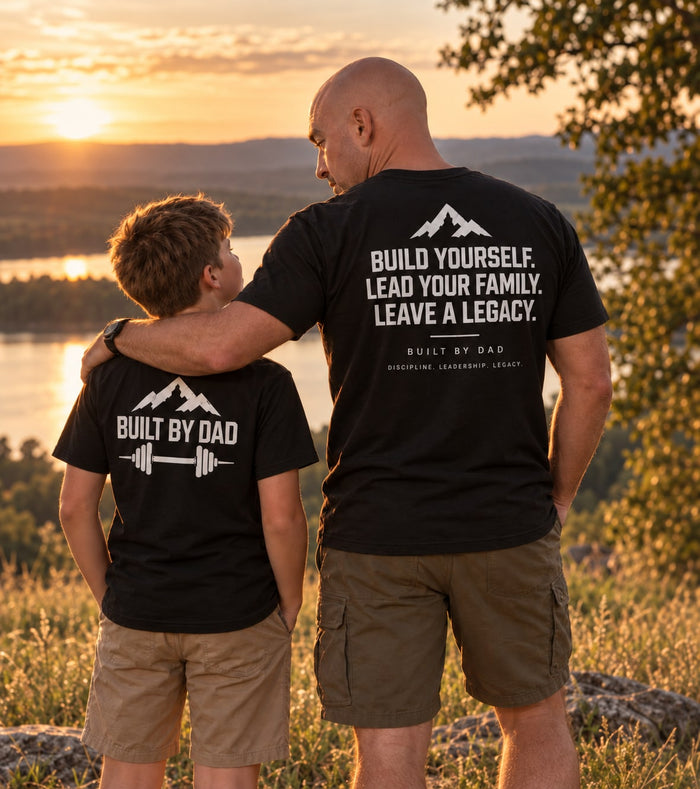
The small logo over the heart and the mountain-and-barbell graphic on the back do the talking quietly. Wear it to an early lift, a weekend hike, or a backyard project, and it breathes with you instead of clinging.
Pros: Lightweight 4.2 oz fabric, tear-away label, true-to-size retail fit, comfortable enough for all-day wear. Cons: Cotton holds moisture longer than a performance fabric, so it's better for hot-weather lifting than for a soaked endurance session.
At $27.99, it's the best value in the lineup for summer training.
3. Heavyweight Sweatpants: The Recovery Layer After the Work
Training is only half the job. The other half is recovering well enough to coach a kid's practice or carry the groceries in without feeling wrecked. The Heavyweight Sweatpants are premium fleece joggers made for training, recovery, coaching, travel, and everyday wear, with an understated logo on the left hip.

Pros: Heavyweight fleece, comfortable for recovery and daily wear, clean branding. Cons: They're a warm layer, so save them for cool mornings and post-workout evenings, not a July run.
They're $31.79, and they pair naturally with either shirt above.
Moisture-Wicking Shirts for Men: What to Look For
Moisture-wicking shirts for men move sweat away from the skin so it can evaporate instead of pooling. Look for three things: a fabric blend that pulls moisture, a fit that lets air move, and a finish that resists odor.
- Fabric: Polyester and nylon blends wick fastest; finely knit wool is showing up in more menswear lines for breathability and odor control, per Men's Health workout shirt testing.
- Fit: Snug enough to wick, loose enough to breathe. A shirt that clings defeats the purpose.
- Finish: Odor control matters when one shirt has to survive a workout and a hardware store run.
Best Workout Shirts for Hot Weather: Fabric, Fit, and Airflow
The best workout shirts for hot weather combine lightweight fabric, ventilation, and a cut that lets air move. But "hot" means different things depending on where and how you train, and most guides treat all heat the same. Here's how to match the shirt to the conditions you actually face.
Hot-humid weather (garage gyms, Southern summers, coastal runs). Humidity slows evaporation, so sweat sits on your skin instead of drying. In this climate, prioritize the lightest fabric you can find and a looser cut that lets air circulate. The 4.2 oz Fatherhood Legacy Tank Top is the cooler call here because cotton breathes well in humid heat and the retail fit keeps fabric off your skin. A performance tee works too, but avoid anything with a tight, clingy cut, in humidity, cling is the enemy.
Dry heat (desert runs, high-altitude hikes, dry summer lifting). Evaporation happens fast, so moisture-wicking performance fabric shines. The Performance Tee moves sweat away from your skin quickly, and in dry air that sweat evaporates before it pools. You can get away with a slightly closer fit here because the air is doing more of the drying work.
Indoor gyms with poor airflow. Most commercial gyms and garage setups have stagnant air, so ventilation features matter more than fabric weight alone. Look for mesh panels, perforations, or a looser cut that lets air move. If your garage gym has a fan, position it to push air across your torso, a cheap box fan does more for breathability than most fabric upgrades.
High-friction training (rucking, carries, sled work). Friction plus sweat equals chafing. Here, a performance fabric with a smooth finish beats cotton, and a fit that stays in place without clinging is key. The Performance Tee's cut is designed for movement, which helps it stay put without rubbing.
Fabric weight is the first filter. Lighter fabric sheds heat faster, which is why the 4.2 oz tank beats a heavy tee in July. Next comes airflow: mesh panels, perforations, and looser cuts all help. Finally, fit and stretch. Four-way stretch and a non-cling cut give you range of motion for squats, carries, and coaching drills.
For hot weather, we'd rank it simply: tank first for humid heat and all-day wear, performance tee first for dry heat and high-friction work, and save the fleece for after dark.
How We Evaluated These Shirts
We judged each piece on four criteria: fabric and breathability, fit and freedom of movement, versatility across training and daily life, and value. But "breathability" is a vague word, so here's how we actually think about it, and how you can test a shirt yourself before you commit.
Fabric and breathability. We look at fabric weight (lighter sheds heat faster), fiber type (polyester and nylon wick fastest; cotton breathes well but holds moisture; wool offers odor control), and construction details like mesh panels or perforations. You can test airflow at home: hold the fabric up to a light and see how much passes through, or breathe through it, if air moves easily, it'll breathe on your body too.
Fit and freedom of movement. A shirt that clings defeats the purpose. We check whether the cut allows air to move between fabric and skin, whether the sleeves allow overhead presses without binding, and whether the length stays put during carries and squats. A simple test: do a set of overhead presses and a set of rows in the fitting room. If the shirt binds or rides up, size up or try a different cut.
Versatility across training and daily life. A shirt that only works in the gym is a worse buy for a dad than one that works in the gym, the yard, and the driveway. We ask: can you wear this from a workout to a hardware store run without feeling out of place? Does it hold its shape after a wash? The more jobs one piece handles, the better the value.
Value. We compare fabric weight, construction details, and versatility against what you'd expect to pay for a similar piece. A lightweight tank that works for summer lifting and backyard projects is a better value than a specialty shirt that only works for one activity.
We didn't run a lab test, and we won't pretend otherwise. What we can tell you is what the garments are made of and who they're built for, based on the product listings. But the tests above are ones you can run yourself, and they'll tell you more about breathability than any marketing claim.
Frequently Asked Questions
What fabric is best for breathable workout shirts for men?
Look for lightweight performance fabrics, often polyester or nylon blends, that move sweat away from your skin and dry fast. Cotton can work for low-effort wear, but it holds moisture and gets heavy. For training and hot days, a moisture-wicking performance tee or a lightweight tank is the safer pick.
Are moisture-wicking shirts better for working out?
For most training, yes. Moisture-wicking shirts for men pull sweat off your skin so it evaporates instead of soaking in, which keeps you cooler and cuts down on chafing. That matters most during high-intensity workouts, running, and hot-weather sessions. For a short walk or yard work in mild weather, a plain cotton tee is fine. Match the fabric to the effort: the harder you plan to work, the more a wicking performance fabric earns its place.
How should a breathable workout shirt fit?
It should sit close enough to move sweat off your skin but loose enough to let air in. You want full range of motion overhead and across your chest without the fabric pulling tight or hanging so baggy it traps heat. Check the shoulders and armpits first, since that is where chafing starts. A retail fit with side seams, like our Legacy Tank Top, keeps its shape and runs true to size.
Can you wear a cotton shirt to the gym?
You can, and a lightweight cotton tank like our Legacy Tank Top (4.2 oz, 100% Airlume combed and ring-spun cotton) breathes well for lifting and everyday wear. Cotton soaks up sweat and dries slower than performance fabric, though, so it is less ideal for long, sweaty sessions or hot weather. For heavy training or hot days, reach for a moisture-wicking performance tee. For early lifts and backyard projects, cotton works fine.
What are the best workout shirts for hot weather?
Prioritize lightweight fabric, airflow, and quick-drying performance. A breathable performance tee handles sweat and heat best for training and yard work, while a lightweight tank gives maximum ventilation for hot-weather lifts. Lightweight, breathable materials and ventilation are deciding factors. Skip heavy cotton, dark colors that trap heat, and anything tight enough to block airflow.
Here's the challenge: your training time is fixed, but your gear isn't. A shirt that keeps you cool and dry makes the minutes you do have count. Built By Dad builds apparel for exactly that man, from the moisture-wicking Performance Tee to the lightweight Legacy Tank to the Heavyweight Sweatpants that carry you through recovery. Start with one piece, wear it hard, and see how it fits your week. Then join our email list for practical training and fatherhood habits built for busy dads.