



Last Updated: October 26, 2026
Quick Summary
A durable fleece hoodie for dads comes down to fabric weight, seam construction, and pilling resistance. Look for 300-360 GSM fleece as a standard everyday range, double-needle stitching at shoulders and armholes, and ribbed cuffs and hem that keep their snap.
- Heavier fleece generally means denser loops, better wind resistance, and less thinness at the elbows.
- Weight alone isn't durability: a heavy hoodie with single-stitched seams fails before a well-built midweight.
- Brushed fleece lining suits indoor and in-and-out wear; thermal or sherpa suits standing still outdoors.
- A fleece hoodie is a layer, not outerwear, so plan a shell over it for wind or rain.
- Wash cold on gentle, skip fabric softener, and tumble dry low or hang to extend its life.
Table of Contents
- What Makes a Fleece Hoodie Durable for Everyday Dad Life
- Why a Heavyweight Fleece Hoodie for Men Holds Up Longer
- Fleece-Lined Hoodie for Men: Lining, Warmth and Breathability
- Zip-Up Fleece Hoodie for Men vs Pullover: Which Fits Your Day
- Fit, Sizing and Layering for Busy Dads
- How to Wash a Fleece Hoodie So It Lasts for Years
- Pick the Hoodie You'll Actually Reach For
- Frequently Asked Questions
What Makes a Fleece Hoodie Durable for Everyday Dad Life
A durable fleece hoodie for dads is one that keeps its shape, resists pilling, and holds warmth through years of carpool lines, cold bleachers, and Saturday projects. Fabric weight, seam construction, and pilling resistance decide whether a hoodie survives season three or falls apart by spring.
Fabric Weight and Garment Weight
Fabric weight is the clearest signal of durability you can read on a label. A RAJCO guide to fleece hoodie weights describes 300-360 GSM as a standard range for an everyday hoodie, with 380 GSM or higher as a premium or luxury weight. Heavier fleece generally means denser loops, better wind resistance, and less see-through thinness at the elbows. Garment weight, the total ounces of the finished piece, follows the same logic: more material usually means more life.
Seams, Cuffs and Pilling Resistance
Check the seams before anything else. Double-needle stitching at the shoulders and armholes resists splitting under repeated pulling. Ribbed cuffs and a ribbed hem keep their snap instead of stretching out. Pilling resistance matters too: low-quality fleece balls up at the underarms and cuffs within a few washes. Anti-pill finishes and tighter-knit cotton faces slow that down.
Why a Heavyweight Fleece Hoodie for Men Holds Up Longer
A heavyweight fleece hoodie for men lasts longer because there is simply more fabric doing the work. Dense fleece absorbs daily friction from seatbelts, backpacks, and workshop benches without wearing thin. It also holds its structure through washing, so the shoulders don't sag and the hood doesn't collapse after a month.
Here's what most guides miss: weight alone isn't durability. A heavy hoodie with single-stitched seams will fail before a midweight one with proper construction. Look for both. For more on comfortable shirts for dads, see our guide. If you like the heavyweight fleece approach, the Built By Dad Everyday Training Joggers carry the same idea into your lower half.

Fleece-Lined Hoodie for Men: Lining, Warmth and Breathability
A fleece-lined hoodie for men adds warmth without bulk, but the lining type changes how and when you'll actually wear it. Most product pages list "fleece lined" and stop there. That's not enough to choose well. Here's the practical breakdown.
The Three Lining Types and What They're For
Brushed fleece lining is the most common. Short, soft fibers trap a thin layer of warm air against your skin. It's breathable enough for indoor wear and cool-weather errands, and it doesn't overheat you the moment you step inside a school gym or grocery store.
Thermal lining (sometimes called micro-fleece or grid fleece) uses a denser or grid-patterned knit to hold more warmth per ounce. It's the better pick for cold morning bleachers, early workshop sessions, or winter dog walks.
Sherpa lining is the warmest and bulkiest option. It's essentially a deep-pile fleece that traps a lot of air. Great for standing still in cold weather, think Friday night football or a winter bonfire. Less great for active use, because it doesn't vent well and adds noticeable bulk under a jacket.
Warmth vs. Breathability: Match the Lining to Your Week
Ask one question before you buy: where will this hoodie spend most of its time?
- Mostly indoors and in and out of buildings (school pickup, errands, office): brushed fleece lining. Breathable, comfortable, won't overheat.
- Mostly outdoors and standing still (coaching, watching games, cold mornings): thermal or sherpa lining. More warmth per layer.
- Active use (hiking, working out, yard work): unlined or lightly brushed fleece. You generate heat fast; heavy lining works against you.
A jersey-lined hood is a separate detail worth checking. It keeps the hood from clinging to your head and adds structure so it doesn't collapse flat. It's not about warmth, it's about how the hoodie wears.
Be Realistic About What Fleece Can Do
A fleece hoodie is a layer, not outerwear. Atlantic Rancher's guidance on fleece hoodies notes that a standard fleece hoodie won't replace a shell in real wind or steady rain. Fleece resists light breeze and traps warmth, but it isn't windproof or waterproof. If your day includes both, plan to layer a shell over your fleece rather than expecting one piece to do everything.
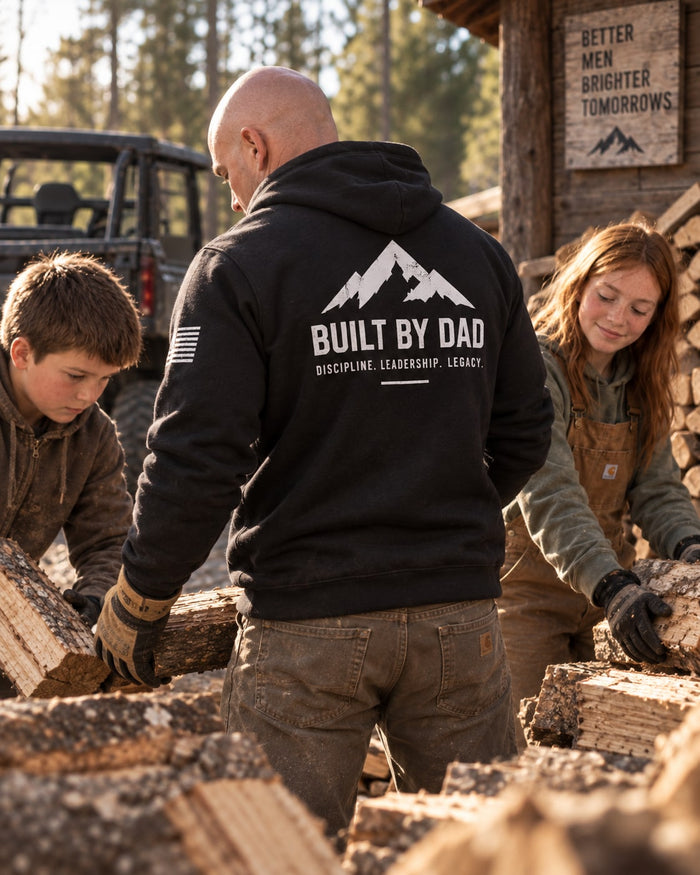
Our Built By Dad hoodie uses a fleece-lined hood and a brushed fleece body built for the in-and-out rhythm of dad life, warm enough for the bleachers, breathable enough for the grocery store.
Here's how the three lining types compare so you can match one to your week.
| Lining type | Best for | Key difference |
|---|---|---|
| Brushed fleece | Indoors and in-and-out of buildings | Breathable, won't overheat inside |
| Thermal (micro-fleece or grid fleece) | Cold bleachers, early workshops, winter dog walks | Holds more warmth per ounce |
| Sherpa | Standing still in cold weather | Warmest and bulkiest, doesn't vent well |
Zip-Up Fleece Hoodie for Men vs Pullover: Which Fits Your Day
Pick a zip-up fleece hoodie for men if you run hot, layer often, or move between indoors and outdoors all day. The full-zip lets you vent without removing the hoodie, and it goes on and off over a cap or a baby carrier without a fight. A zip-up sweatshirt also works better as a mid-layer under a jacket.
Built by Dad Hoodie — Men's Outdoorsy Hooded Sweatshirt →
Choose a pullover hoodie when you want maximum warmth with fewer failure points. Zippers are the first thing to break on any hooded sweatshirt, and a pullover sidesteps that entirely. It also feels more relaxed for couch-and-coffee mornings. Neither is "better." Match the closure to your routine and you'll wear it more.
Fit, Sizing and Layering for Busy Dads
Fit decides whether a hoodie becomes a favorite or stays in the drawer. Most sizing guides treat you as a generic men's apparel shopper. Dad life isn't generic. Your build, your age, and your daily routine all change what "good fit" means.
Start With Your Actual Measurements
Measure your chest at the fullest point, your waist at your natural waistline, and your sleeve from shoulder seam to wrist. Compare those numbers to the brand's size chart, not to the size you wore in college. Bodies change, and so do size charts between brands. Guessing is how you end up with a hoodie that bunches at the waist or rides up under a coat.
Fit by Build and Routine
Broader chest and shoulders: A regular or relaxed fit with a bit of stretch in the fabric gives you room to move without pulling at the armholes.
Longer torso: Look for a hoodie with a longer body length and a ribbed hem that sits below your beltline.
Layering over a tee or under a jacket: A relaxed fit leaves room for a base layer without looking sloppy. A slim fit layers cleanly under a jacket but limits what you can wear beneath it.
Running hot or cold: If you run hot, size true and rely on the closure (zip vs. pullover) to vent. If you run cold, size true and layer underneath rather than sizing up.
Layering Without the Bulk
A hoodie should be the middle of your layering system, not the whole thing. On cold days: base layer (tee or thermal) → fleece hoodie → shell if wind or rain is in the forecast. On mild days, the hoodie is your outer layer. The key is that each layer fits without compressing the one beneath it, if your hoodie feels tight over a tee, it's too small for layering.
How to Wash a Fleece Hoodie So It Lasts for Years
Knowing how to wash a fleece hoodie is the difference between three seasons and ten. Turn it inside out, wash cold on a gentle cycle, and skip fabric softener, which coats the fleece and flattens it over time. Our FAQ page answers common care and product questions. Tumble dry on low or hang it to dry. High heat is what shrinks cotton blends and pills the surface.
A few habits extend life further:
- Zip the zipper and button any closures before washing
- Wash with similar colors and avoid heavy items like jeans
- Use a mesh bag if the hoodie has a delicate drawcord
- Store folded rather than on a hanger to protect the shoulders
Pick the Hoodie You'll Actually Reach For
The best hoodie is the one that survives your actual week. Check fabric weight, seams, lining, closure, and fit in that order, then commit to cold washing and low heat. Do that, and a good hoodie becomes part of your routine for years.
That's the standard we build toward: gear that holds up so you can focus on showing up for your family. The Built by Dad Hoodie brings a heavyweight 10 oz fabric, a fleece-lined hood, a relaxed fit for layering, and double-needle seams into one piece made for workshop mornings and weekend trails. Start there, and build the rest of your rotation around it.

Frequently Asked Questions
What makes a fleece hoodie durable?
Durability comes down to fabric weight, seam construction and how the fleece resists pilling. Heavier fabric, around 10 oz in a work-ready hoodie, holds its shape better than thin fleece. Double-stitched or split-stitch seams take strain at the shoulders and cuffs. Anti-pill finishes and a tight knit keep the surface from going fuzzy after repeated washes. Check the label for fabric weight, seam type and care instructions before you buy, then follow the wash guidance to protect what you paid for.
Is a heavyweight fleece hoodie warmer than a lightweight one?
Yes, in general. A fleece guide cited by RAJCO describes 300-360 GSM as a standard everyday range and 380 GSM or higher as a premium or luxury weight, so more fabric per square metre means more trapped warmth. Heavier fleece also blocks wind better as a mid layer. The trade-off is breathability: a heavyweight fleece hoodie for men can run warm during hard activity, so plan to layer it over a tee rather than wear it alone on a long hike.
How should a fleece hoodie fit?
Aim for a regular fit that leaves room to layer a shirt underneath without swimming in fabric. The shoulders should sit on your shoulder line, the ribbed cuffs should stay put when you reach overhead, and the hem should cover your waistband when you bend down. If you plan to wear it over a flannel or under a jacket, size up one. A relaxed fit works well for coaching and workshop days; a slimmer fit looks sharper for casual wear.
How do you wash a fleece hoodie so it lasts longer?
Wash cold on a gentle cycle, skip the bleach, and tumble dry on low heat. Turn the hoodie inside out to reduce surface wear and pilling, and avoid fabric softener, which coats the fleece and cuts its loft. Zip up any zipper before washing to stop it snagging the fabric. Air dry when you can. Our own hoodie lists machine wash cold at 30C or 90F, no bleach, and tumble dry low, which is a good rule to follow for most fleece.
Your family notices what you reach for every day, and the gear you trust says something about how you approach the work. Get started with Built By Dad and build a wardrobe that keeps up with the father you're becoming.
