

Last Updated: October 29, 2026
Quick Summary
The best mens gym tank tops let you train without thinking about your gear, so judge them on fabric weight, armhole fit, and how they hold shape after washing. Our pick for most dads is the Fatherhood Legacy Tank Top, a 4.2 oz cotton tank in a retail fit that runs true to size.
- Cotton tanks suit cool-garage lifting, while moisture-wicking blends work better for hot or sweaty sessions.
- Check armhole depth so the tank clears your shoulder blade without gaping at the chest.
- Side seams and self-fabric binding at the neck and arms help a tank hold shape through washes.
- Build a small rotation: one cotton tank, one wicking piece, and one clean set ready to grab.
- Wash cold and air-dry when you can, since damp synthetic gear left in a bag builds odor fast.
Table of Contents
- What to Look for in Mens Gym Tank Tops
- Quick Comparison: Built By Dad Gym Tank and Training Gear
- 1. Built by Dad Fatherhood Legacy Tank Top
- 2. Performance Tee for Days You Want Sleeves
- 3. Heavyweight Sweatpants to Round Out the Kit
- Moisture Wicking Workout Shirts and When They Matter
- How to Choose Workout Clothes for Busy Dads
- Body Type, Layering, and Getting More From Each Tank
- Frequently Asked Questions
What to Look for in Mens Gym Tank Tops
The right mens gym tank tops solve one problem before anything else: they let you train without thinking about what you're wearing.
Fabric weight is the number most shoppers skip. Lighter cotton tanks breathe well in a warm gym and layer under a hoodie without bulk. Heavier cotton holds its shape longer but can trap heat during high-intensity interval training.
Breathability comes from the knit and the fiber, not the marketing label. Combed and ring-spun cotton feels softer against the skin, while synthetic blends and polyester-spandex move sweat away faster. If you train hard and sweat heavily, a moisture-wicking tank earns its place.
Fit, Armhole Depth, and Range of Motion
A tank that binds at the shoulder limits your press and pull. Look for armhole depth that clears the shoulder blade without gaping at the chest. A retail fit with side seams keeps its shape; a loose muscle tank gives more room but can ride up during overhead work.
Check the racerback or Y-back cut if you do a lot of pulling. These designs open the shoulder for full range of motion. Sleeveless cuts with self-fabric binding at the neck and arms resist stretching out over time.
Quick Comparison: Built By Dad Gym Tank and Training Gear
Here is how our training lineup stacks up, so you can pick the right piece for the session ahead.
| Product | Price | Best For | Fabric Notes |
|---|---|---|---|
| Fatherhood Legacy Tank Top | $27.99 | Lifting, coaching, warm days | 4.2 oz cotton, retail fit, tear-away label |
| Performance Tee | $34.99 | Sweaty training, yard work | Moisture-wicking, built to move |
| Heavyweight Sweatpants | $31.79 | Recovery, travel, coaching | Heavyweight fleece, understated logo |
Browse the full Performance collection to compare the tank against the rest of our training gear in one place.
1. Built by Dad Fatherhood Legacy Tank Top
[IMAGE: A dad in a sleeveless tank top coaching a kid through a pull-up on a backyard bar at sunrise, gym bag and water bottle nearby | section:1.
The retail fit and side seams help the tank hold its shape, and the tear-away label keeps a tag from scratching at your neck mid-set.
Best for: dads who want one tank that works for lifting, coaching, and backyard projects. Skip if: you sweat heavily and want a synthetic, quick-dry fabric instead of cotton.
2. Performance Tee for Days You Want Sleeves
Not every training day calls for a tank. The Performance Tee is our moisture-wicking option for the sessions where you want sleeves, whether that's a humid run, a long yard-work afternoon, or a coaching practice in the sun.
Where it fits: the days you'd rather not go sleeveless but still want performance fabric. The trade-off is straightforward. You get coverage and sweat management, but you lose the open airflow a tank gives you on a hot lifting day.
Best for: sweaty sessions and outdoor work where sleeves make sense. Skip if: you're lifting in a cool garage and prefer the feel of cotton.
3. Heavyweight Sweatpants to Round Out the Kit
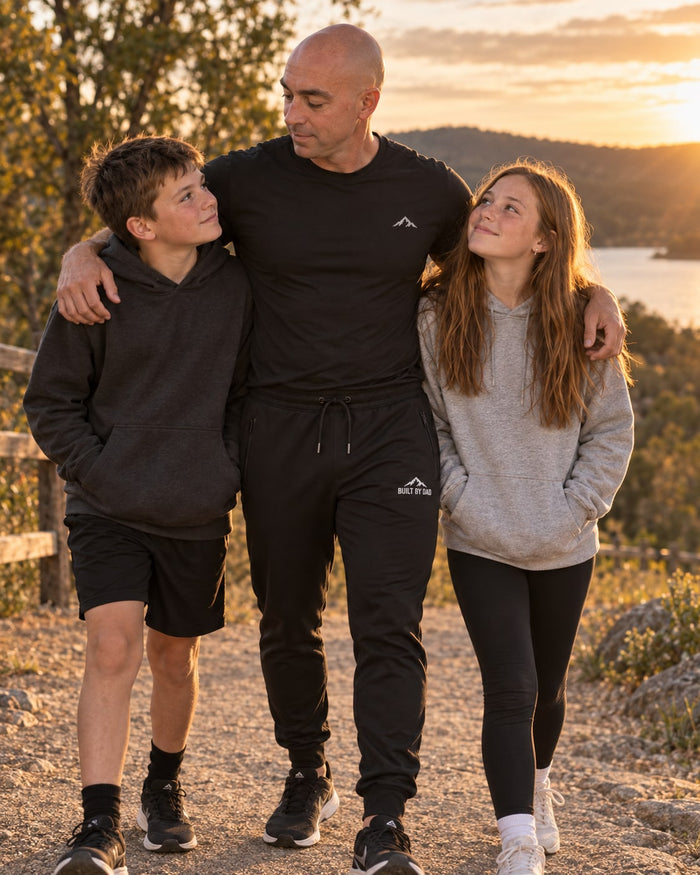
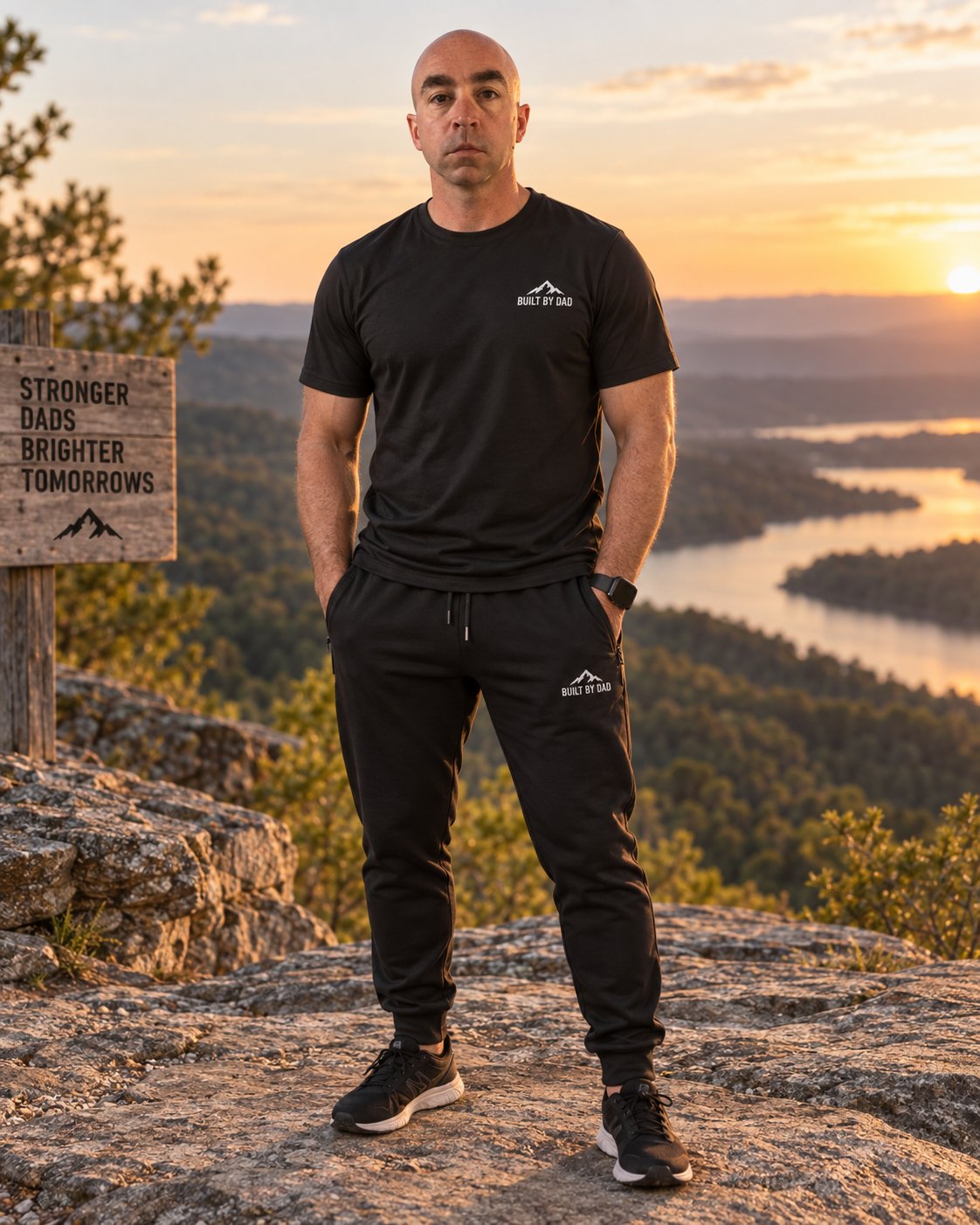
Training doesn't end when the last set does. The Heavyweight Sweatpants are built for recovery, travel, and coaching from the sideline. They're heavyweight fleece joggers with a clean Built By Dad logo on the wearer's left hip, designed for training, recovery, coaching, travel, and everyday wear.
Pair them with the tank for a warm-up, or wear them on a rest day when you're chasing kids around the yard. They're the piece that turns a single tank into a full training kit.
Best for: recovery days, travel, and coaching in cooler weather. Skip if: you only want one piece and already have everyday joggers you like.
Moisture Wicking Workout Shirts and When They Matter
Moisture wicking matters most when you sweat heavily and train in heat. Synthetic fibers like polyester and nylon generally absorb less water than cotton, which is why wicking fabrics are often used for hot or sweaty training. Cotton holds moisture more readily, so it can feel heavier when soaked.
Built by Dad Fatherhood Legacy Tank Top →
That difference shows up in real sessions. During high-intensity interval training, cardio, or a humid outdoor workout, a wicking blend keeps the fabric lighter and reduces the clammy feel that comes with trapped sweat. In a cool garage with moderate effort, a breathable cotton tank is often more comfortable and easier to care for.
What to Look for on the Label
- Fiber content first. Polyester-spandex blends stretch and tend to dry quickly. Cotton-poly blends sit in the middle, softer than pure synthetic and faster-drying than pure cotton.
- Knit structure. Jersey knits are smooth and simple; mesh panels and open-knit zones add airflow where you heat up most, usually the back and underarms.
- Fabric weight. Lighter knits generally breathe better for hot sessions; heavier knits hold shape but can trap heat.
- Finishes. Some fabrics come with odor-control finishes. They're a nice-to-have, not a substitute for actually washing your gear.
The Honest Trade-offs
Synthetic blends dry fast but can hold odor if they sit in a gym bag overnight. Cotton feels softer against the skin but stays damp longer and gets heavy when soaked. Neither is a flaw, they're just different tools.
Our rule of thumb: reach for a sweat-wicking shirt on hot, sweaty days and a breathable cotton tank when you're lifting in a cool space. Matching the fabric to the session beats buying one shirt and hoping it covers everything.
How to Choose Workout Clothes for Busy Dads
Most of us train in short windows, before work or after the kids are down, so the gear has to be ready when the window opens. The question isn't "what's the best tank," it's "what does my week actually look like, and what do I need to show up for it?"
Here's a framework that works for a real dad schedule.
Step 1: Map Your Week
Write down the sessions you actually do, not the ones you wish you did. A common pattern looks like this:
- Two or three lifting sessions in a cool garage or basement.
- One or two cardio or HIIT sessions, often in a warmer space or outdoors.
- Coaching or sideline time on weekends.
- Yard work and house projects that sneak in as training.
That map tells you what to buy. If most of your week is cool-garage lifting, cotton tanks earn their keep. If you sweat heavily or train in heat, wicking fabric does more work for you.
Step 2: Build a Small Rotation
Two or three tanks you actually wear beat a drawer full of options. A practical rotation for most dads:
- One cotton tank for cool lifting and layering.
- One moisture-wicking tank or tee for hot or sweaty sessions.
- One clean set ready to grab, tank and joggers, so there's no excuse when the window opens.
Step 3: Check the Fit Before You Buy
- Armhole depth. If it binds on an overhead press, it will bind every time. Look for a cut that clears the shoulder blade without gaping at the chest.
- Side seams and binding. Side seams and self-fabric binding at the neck and arms hold shape through washes; cheap binding stretches out.
- Tear-away labels. A small detail that keeps the label from rubbing mid-set.
- Size guide. Check the size guide before you order so you get the right fit the first time instead of guessing and returning.
Step 4: Match Fabric to Session, Not to Marketing
Cotton for cool garage lifts. Wicking blends for hot or sweaty training. A lightweight cotton tank around 4.2 oz breathes well and layers under a hoodie without bulk; heavier cotton holds shape but traps heat during high-intensity work. Buy for the sessions you actually do.
Step 5: Care for It So It Lasts
Wash cold and air-dry when you can. Synthetic gear that sits damp in a bag overnight is the fastest way to build odor. A little care keeps a small rotation working for years.
If you want a starting point, the Fatherhood Legacy Tank Top covers cool-garage lifting and layering, and the Performance Tee covers the sweaty sessions. Pair either with the Heavyweight Sweatpants for warm-ups and recovery days, and you've got a kit that handles most of the week.
Body Type, Layering, and Getting More From Each Tank
Body type changes which cut feels right. Broader builds may prefer a deeper armhole and a relaxed cut, while leaner frames often prefer a closer retail fit. Neither is better, they just sit differently on different builds.
Layering adds versatility. A cotton tank works as a base under a hoodie on cold mornings, then stands alone once you warm up.
Fit is the other lever. Check the size guide before you order so you get the right fit for your build the first time, rather than guessing and returning.
Frequently Asked Questions
What is the best material for a gym tank top?
It depends on how you train. Cotton blends like the 100% Airlume combed and ring-spun cotton in the Built by Dad Fatherhood Legacy Tank Top feel soft and breathe well for lifting and everyday wear. For high-sweat sessions like HIIT, look for performance fabric with moisture-wicking and quick-dry properties. Many men keep both: cotton for lifting days and a synthetic blend for cardio.
Should gym tank tops be loose or tight?
Most men do best with a fit that sits close to the body without restricting movement. A retail fit with side seams, like the Legacy Tank Top, keeps its shape and stays out of the way during lifts. Stringer and muscle tank styles run looser through the armholes for range of motion. Try your normal size first; the Legacy Tank runs true to size.
Why do men wear stringer tank tops to the gym?
Stringers and Y-back tanks have deep armholes and a racerback cut that free up the shoulders for pressing and pulling. They also ventilate well during high-intensity interval training. Some men wear them to show training progress, but the practical reason is range of motion and airflow. If you want something less revealing, a standard sleeveless tank covers more while still breathing.
Are cotton tank tops good for working out?
Yes, for most lifting and general training. Cotton is breathable and soft against the skin. The trade-off is that cotton absorbs sweat rather than wicking it away, so it can feel heavy in long cardio sessions. Pair a cotton tank with moisture wicking workout shirts or a performance tee on days you expect to sweat hard.
How should a workout tank top fit?
The hem should stay put when you raise your arms, the armholes shouldn't gap wide open at the chest, and the shoulders should sit on your shoulder line, not slide off. Check range of motion with a few overhead presses before you commit. The Legacy Tank includes a tear-away label and self-fabric binding for comfort.
Your training window is short, and the last thing you need is gear that gets in the way. Built By Dad makes apparel for dads who train, coach, and show up, with a lightweight Legacy Tank Top that breathes through a lift, a moisture-wicking Performance Tee for sweaty days, and heavyweight fleece joggers for recovery. Start with one piece that fits your week, then build the rotation. Explore the training gear and find the setup that keeps you moving.
